Find Waterproof Lightweight Travel Trolley Case for Business, Outdoor, and Travel
Source 30 waterproof lightweight travel trolley case options from verified Chinese manufacturers. Compare features like PU, Nylon, EVA, and ABS materials, along with sizes ranging from 14 to 32 inches and customization services for business and outdoor use.
Key considerations
Products List




Comprehensive Sourcing Guide
Strategic Sourcing Guide for Waterproof Lightweight Travel Trolley Cases
Defining Product Specifications and Material Variants
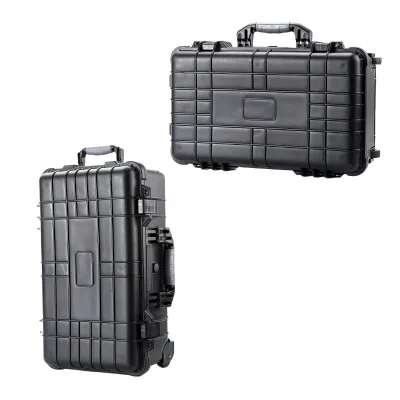
When sourcing a waterproof lightweight travel trolley case, the buyer must first navigate a complex landscape of material compositions and structural designs. The core keyword implies a product that balances durability with portability, yet the market offers distinct variations in construction. Based on observed product attributes, the primary shell materials include Polyurethane (PU), Nylon, Ethylene-Vinyl Acetate (EVA), and Acrylonitrile Butadiene Styrene (ABS). Each material presents a unique trade-off between weight, rigidity, and water resistance. PU and Nylon are frequently cited for their flexibility and softness, often categorized under "Soft" or "Medium Soft" hardness levels, which can be advantageous for maximizing internal packing volume when the case is not fully rigid. Conversely, ABS and EVA variants typically offer a more rigid structure, often associated with "Hardness" classifications that provide superior impact protection for sensitive electronics or fragile items during transit.
The shape of the trolley case is another critical specification. The inventory data indicates a prevalence of "Trolley Cases" and "Trolley Bags," alongside general "Luggage" classifications. The distinction between a hard-shell trolley case and a soft-shell trolley bag often dictates the internal organization and the type of protection offered. For buyers requiring a rigid exterior to withstand rough handling, ABS or EVA shells are the logical starting point. For those prioritizing weight reduction and expandability, PU or Nylon soft-shell options are more suitable. The internal material is consistently noted as Polyester, which serves as a durable lining for the main compartment and pockets. This internal composition is essential for preventing abrasion against clothing and ensuring the longevity of the case's interior structure.
Furthermore, the dimensions of the trolley case are not uniform across the market. Observed standards range from compact 14-inch carry-on sizes to larger 20-inch, 24-inch, 28-inch, and even 32-inch checked luggage options. Specific model numbers such as 999, A353, and CML-0026 suggest that manufacturers produce distinct SKUs tailored to these size standards. Buyers must verify the exact cubic meter (Cbm) volume and physical dimensions, such as the 6230.559cm specification observed in certain listings, to ensure compliance with airline regulations and shipping container optimization. The "Trend" and "Simplicity" style attributes indicate that modern designs favor clean lines and functional aesthetics, which may influence the final selection based on the target demographic.
Caster Systems and Mobility Engineering
The mobility of a travel trolley case is fundamentally determined by its caster system. The observed data reveals a clear divergence between "Built-in," "External," and "Spinner" caster configurations. A built-in caster system typically implies wheels that are recessed into the shell, offering a sleeker profile and potentially better protection for the wheels themselves. In contrast, external casters are mounted on the outside of the case, which can sometimes provide better clearance for the wheels to rotate freely over obstacles but may protrude and be more susceptible to damage. The "Spinner" designation is particularly significant, as it indicates a four-wheel system that allows the case to roll 360 degrees, offering superior maneuverability in tight airport terminals or crowded spaces compared to traditional two-wheel trolley systems.
When evaluating caster quality, buyers should look for specifications regarding the wheel material and bearing type, though specific brand names or test results are not provided in the source data. The presence of "Built-in" casters in soft-shell cases suggests a design that integrates the wheel mechanism into the fabric structure, while "External" casters are more common in hard-shell variants. The choice between these systems depends heavily on the intended usage environment. For smooth airport floors, spinner casters are ideal. For rougher terrain or outdoor usage, as noted in the "Usage: Travel, Outdoor" attribute, larger diameter wheels with robust bearings are necessary to prevent getting stuck. The "Hardness" of the case also interacts with the caster system; a soft case with built-in casters may flex differently under load than a rigid ABS case with external wheels, affecting the overall rolling experience.
Functional Attributes and Protective Features
The functional requirements for a waterproof lightweight travel trolley case extend beyond mere water resistance. The observed attributes highlight "Waterproof" as a primary feature, alongside "Anti-Theft" capabilities. This combination suggests that the product is designed for high-security travel scenarios where protection from both environmental elements and theft is paramount. The "Waterproof" classification implies that the material and construction methods, such as sealed zippers or welded seams, prevent water ingress. However, buyers must verify the specific rating of this waterproofing, as terms like "water-resistant" and "waterproof" are often used interchangeably in marketing but carry different technical meanings.
The "Anti-Theft" function often involves specific design elements such as lockable zippers, hidden compartments, or slash-resistant materials. The "Opening Method" is listed as "Zipper," which is the standard mechanism for these cases. The integration of a lock into the zipper track is a common method to achieve the anti-theft claim. Additionally, the "Function" attribute explicitly lists both "Waterproof" and "Anti-Theft," reinforcing the dual-purpose nature of these products. For business travelers, the "Usage: Travel, Business" attribute indicates that these cases must also maintain a professional appearance while offering robust protection. The "Custom Logo Accepted" and "OEM: Yes" attributes suggest that these functional features can be customized for corporate branding, allowing businesses to equip their employees with standardized, secure luggage.
Cost Drivers and Pricing Dynamics
Understanding the cost drivers for waterproof lightweight travel trolley cases requires an analysis of material costs, manufacturing complexity, and customization options. The observed price range in USD spans from 5.68 to 200, a significant variance that reflects differences in material quality, brand positioning, and feature sets. Lower-priced items in the 5.68 to 20 range likely utilize standard Nylon or PU materials with basic zipper closures and standard caster systems. These products may lack advanced anti-theft features or high-end waterproofing technologies. Conversely, the higher end of the spectrum, approaching 200 USD, likely corresponds to cases made from premium ABS or EVA materials, featuring spinner casters, integrated TSA locks, and advanced waterproof sealing.
The Minimum Order Quantity (MOQ) is another critical factor influencing the unit cost. The observed MOQ range of 1 to 550 units indicates a flexible market structure. An MOQ of 1 suggests a ready-to-ship or drop-ship model, which typically carries a higher per-unit cost due to the lack of economies of scale. In contrast, an MOQ of 550 allows for significant cost reductions through bulk manufacturing and optimized logistics. Buyers must balance their immediate inventory needs with the potential for cost savings through larger orders. The "Packing" attribute, which includes options like "5000" units or "1PC/Box," also impacts the final landed cost. Bulk packing reduces packaging material costs and shipping volume, whereas individual box packing adds to the unit price but may be necessary for retail presentation.
Supplier Evaluation and Customization Capabilities
Evaluating suppliers for waterproof lightweight travel trolley cases requires a focus on their customization capabilities and production standards. The data confirms that "Customization" is available, and "OEM" services are offered, indicating that suppliers are willing to tailor products to specific buyer requirements. The "Custom Logo Accepted" attribute is a key differentiator, allowing buyers to brand the luggage for corporate gifting or retail distribution. However, the extent of customization—whether it is limited to logo placement or extends to material selection, color, and internal layout—must be clarified during the negotiation phase.
The "prod_packing" attribute lists options such as "by Sea or Courier as DHL, FedEx, UPS, EMS," which highlights the supplier's logistical flexibility. This is crucial for buyers who need to manage their own shipping logistics or require expedited delivery for urgent orders. The "prod_standard" of "High quality" is a subjective claim that must be validated through sample inspection and reference checks. Buyers should verify the supplier's origin, which is listed as "Zhejiang, China" or generally "China," to understand the regional manufacturing ecosystem. Zhejiang is a known hub for luggage and leather goods, suggesting a mature supply chain with access to raw materials and skilled labor.
| Feature | Observation | Verification Requirement |
|---|---|---|
| Customization | Available, OEM Yes | Confirm scope (logo, mold, color) |
| Origin | Zhejiang, China | Verify factory audit reports |
| Packing | Sea, DHL, FedEx, etc. | Confirm Incoterms and packaging specs |
| Standard | High quality | Request sample for physical inspection |
| Model | 999, A353, CML-0026 | Match model to specific size/feature needs |
Quality Control and Compliance Verification
Quality control for travel trolley cases must address both material integrity and functional performance. While specific test results are not provided in the source data, buyers should establish a rigorous inspection protocol. The "Hardness" attribute, ranging from "Soft" to "Medium Soft," requires physical testing to ensure the material does not tear under stress or deform excessively when loaded. The "Waterproof" claim necessitates water spray or immersion testing to verify that no leakage occurs under expected travel conditions. Similarly, the "Anti-Theft" function should be tested by attempting to cut or force the zippers and locks to ensure they meet the claimed security level.
Compliance and certification checks are essential, particularly for international markets. Although specific certification names are not listed in the supplied facts, buyers should ensure that the materials used, such as Nylon, PU, and ABS, comply with relevant safety and environmental standards in the destination country. For example, restrictions on certain chemicals in plastics or textiles may apply. The "prod_standard" of "20"/24"/28"" implies adherence to size regulations, but buyers must also verify that the cases meet airline carry-on and checked baggage size limits for their target markets. The "Cbm" of 0.11 for specific models is a critical data point for logistics planning, ensuring that the packaging density is optimized for container shipping to reduce freight costs.
Long-Term Procurement and Application Strategy
The long-term procurement strategy for waterproof lightweight travel trolley cases should focus on scalability and adaptability. The "Usage" attributes of "Travel, Outdoor, Business" indicate a versatile product that can serve multiple market segments. Buyers should consider how the product fits into their broader portfolio. For instance, a case with "Trend" styling may appeal to younger demographics, while "Simplicity" and "Business" usage may target corporate clients. The ability to customize the logo and color (White, Red, Blue, Yellow, Purple, Black) allows for targeted marketing campaigns and seasonal collections.
Lead times and production capacity are critical for maintaining supply chain stability. While specific lead times are not provided in the data, the MOQ range of 1 to 550 suggests that suppliers can handle both small batch orders and large volume production. Buyers should establish clear communication channels regarding production schedules and potential delays. The "prod_packing" options, including "Carton" and "1PC/Box," should be standardized to ensure consistency in the final product presentation. Ultimately, the success of sourcing these cases depends on a thorough understanding of the technical specifications, a rigorous quality control process, and a strategic approach to supplier relationships that prioritizes flexibility and reliability. By leveraging the observed attributes and verifying them through direct engagement, buyers can secure a supply of high-quality waterproof lightweight travel trolley cases that meet their specific operational and commercial needs.
FAQs
What materials are used for waterproof lightweight travel trolley cases?
These cases are constructed from PU, Nylon, EVA, or ABS materials. PU and Nylon offer soft flexibility, while EVA and ABS provide rigid protection for sensitive items during transit.
Which caster systems are available for these trolley bags?
Buyers can choose between built-in, external, or spinner caster configurations. Spinner systems allow 360-degree movement, while built-in wheels offer a sleeker profile for soft-shell designs.
Can I customize the logo on these travel luggage items?
Yes, customization is available with custom logo acceptance and OEM services. Suppliers support branding for corporate gifting or retail distribution across various color options like white, red, or black.
What are the standard sizes for these trolley cases?
Standard sizes range from 14 inches to 32 inches, including 20, 24, and 28-inch models. Specific dimensions like 62*30.5*59cm are available to meet airline carry-on or checked baggage regulations.
How much does a waterproof lightweight travel trolley case cost?
The observed price range spans from 5.68 to 200 USD depending on material and features. Lower prices typically reflect basic Nylon or PU materials, while higher costs cover premium ABS or EVA shells.
What is the minimum order quantity for these products?
The minimum order quantity varies from 1 to 550 units based on supplier terms. An MOQ of 1 suits drop-shipping needs, while larger orders of 550 units enable significant cost reductions through bulk manufacturing.